TLDR
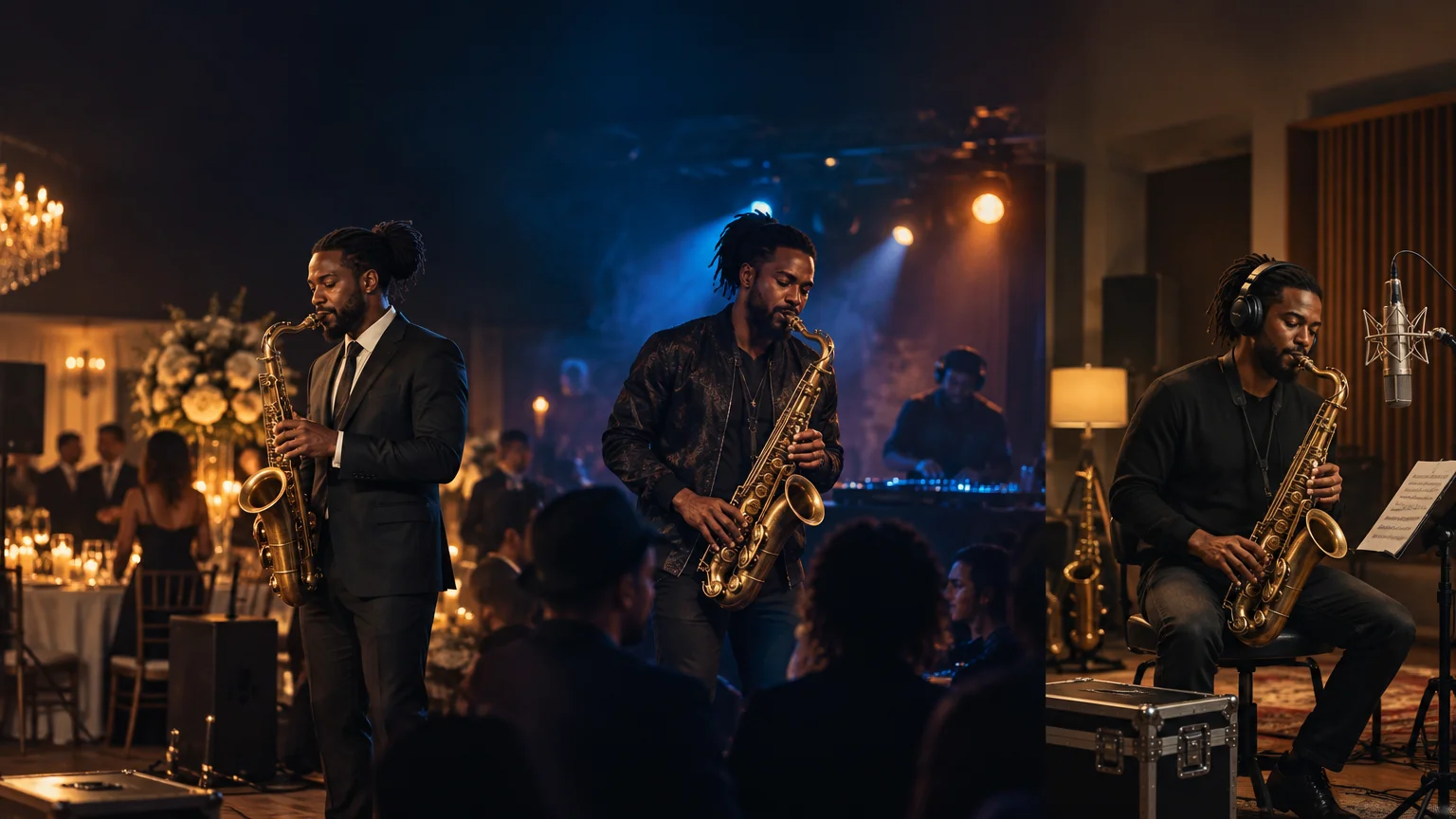
If you are comparing musician income streams gigs sessions and related work, do not judge opportunities by the headline fee alone. Private events usually sell a polished, client-centered experience. Club dates sell a performance that may also build relationships, repertoire and visibility. Session work sells a defined recorded contribution. The strongest working model usually combines one dependable cash-flow lane with one or two services that create repeat bookings without competing for the same hours.
A musician can be busy and still operate an unstable business. Three dates on a calendar may require three different preparation systems, payment timelines and levels of risk. The practical question is not simply, “Which job pays more?” It is, “What am I being paid to deliver, what will it cost me to deliver it, and can this relationship produce useful future work?”
How musician income streams, gigs and sessions differ
A live engagement purchases your presence at a particular place and time. A private-event client may also expect coordination, formal presentation, requests and smooth interaction with planners or other vendors. A club books entertainment for its room and audience. A bandleader hires a sideman to execute a musical role inside a larger show.
A session purchases a recorded contribution. That could mean one approved saxophone solo, several background parts, a complete horn arrangement or files delivered remotely. The session fee and scope should account for preparation, recording time, editing, file organization, alternate takes, revisions and the intended use of the recording.
That difference changes the business model. A live date ends when the contracted performance obligation is complete, apart from follow-up and administration. A recorded part can be edited, duplicated and released in contexts beyond the day it was played. That does not mean every session musician should receive royalties, but it does mean use, ownership, credit and compensation should be discussed rather than assumed.
| Income lane | What the buyer needs | Preparation burden | Repeat potential | Main risk |
|---|---|---|---|---|
| Private events | A polished performance fitted to a client schedule and atmosphere | Repertoire, wardrobe, logistics and coordination can be substantial | Strong when planners, venues and clients refer reliable musicians | Underpricing travel, waiting time, requests or production duties |
| Club work | Entertainment that fits the room, audience and operating schedule | Varies from a familiar set to a full rehearsal cycle | Useful for residencies, local relationships and band development | Treating exposure or door estimates as guaranteed compensation |
| Residencies | A repeatable show delivered consistently | High at launch, then potentially more efficient | High if dates and terms remain dependable | Letting an expanded workload creep into the original fee |
| Sideman or touring calls | Prepared execution within another artist’s show | Charts, memorization, rehearsals and travel readiness | Strong when reliability leads to recurring calls | Ignoring unpaid preparation, travel days or schedule restrictions |
| In-person sessions | Usable recorded performances under direction | Practice, travel, setup and studio time | Strong with producers, writers and engineers who work regularly | Unclear overtime, reuse, credit or cancellation terms |
| Remote sessions | Organized, release-ready files delivered on schedule | Recording, editing, file naming and revisions | Can extend beyond the musician’s local market | Unlimited revisions or technical expectations outside the quote |
| Arranging and chart preparation | Parts that solve an ensemble or production problem | Creative work plus notation, proofing and transposition | Good when paired with sessions or live production | Giving away substantial writing work as a minor add-on |
| Teaching or coaching | Structured instruction and feedback | Planning, scheduling and student administration | Often recurring when attendance is consistent | Calendar fragmentation and late cancellations |
| Owned compositions or recordings | Music that can be licensed, sold or exploited by its owners | Writing, production, registration and promotion | Potentially repeatable, but not predictable | Assuming a performance credit equals ownership or royalty eligibility |
Private events sell confidence, not just a set list
At a private event, the musical performance is only one part of the product. The client is also buying punctuality, communication, appropriate volume, visual presentation and the ability to handle schedule changes without making the event feel chaotic. A player who can read the room, coordinate with a DJ and deliver a clean entrance at the right moment may be more useful than a flashier player who needs constant management.
Evaluate the entire call before quoting or accepting. Count repertoire preparation, rehearsals, travel, parking, loading, soundcheck, standby time, set length, equipment, wardrobe and post-event administration. Ask whether you are supplying a PA, wireless microphone, backing tracks or additional musicians. A 45-minute performance can occupy most of a day once those obligations are included.
Confirm the hiring contact, performance address, access instructions, call time, finish time, fee, deposit, expenses, cancellation terms and final payment deadline. Written terms are useful even when the client is friendly or the bandleader is a regular collaborator. The Musicians’ Union publishes live-engagement guidance and standard-contract resources, reinforcing the practical value of documenting the booking rather than relying on memory.
Club dates can be valuable without becoming your whole strategy
Club work can sharpen a band, test arrangements and create relationships with singers, DJs, promoters and other musicians. A residency can be especially efficient because the repertoire, travel route and production routine become familiar. That consistency has business value even when another type of booking carries a higher fee.
The danger is confusing activity with profit. Before accepting a club date, identify whether the compensation is guaranteed, dependent on ticket sales, based on the door or tied to another condition. Then account for rehearsal and transport. If the date primarily serves a promotional purpose, make that a conscious investment with a defined goal—not a story you tell yourself after the expenses arrive.
Club relationships become more useful when they feed an adjacent offer. A saxophonist playing a lounge residency might develop a compact DJ-and-sax set for private events, meet vocalists who need overdubs, or build a duo suitable for cocktail hours. After a strong date, use a consistent post-gig follow-up system instead of waiting for people to remember you.
A session fee pays for a defined recording contribution
For session work, begin with intended use. A demo, independent single, advertisement, film score, broadcast production and union-covered recording may involve materially different requirements. The American Federation of Musicians identifies multiple recording and digital-media agreements, reflecting how payment structures can vary with the work and its use. AFM recording and digital-media guidance
Define the number of songs, expected parts, delivery format, deadline and included revisions. For remote work, specify whether the client receives raw takes, edited comp-ready files, processed files, MIDI or notation. If the producer asks for stacked sections, improvised options and written harmony parts, that is a broader assignment than recording one supplied line.
I would also separate playing from arranging when the creative burden is substantial. Reharmonizing a supplied horn figure, designing voicings and preparing parts can be a distinct service, even when the same musician records the result. Musicians developing that offer should be able to explain how they preserve a recognizable hook while changing its harmonic setting; this horn-line reharmonization method provides a practical musical framework.
Confirm these session terms before recording
- Who is hiring you and who is authorized to approve the performance?
- What is the project, and how will the recording be used?
- How many songs, cues or sections are included?
- Are parts supplied, improvised or created by the player?
- Which file formats, sample rate, bit depth and naming convention are required?
- How many alternate takes and revision rounds are included?
- When is the deadline, and what counts as final approval?
- What are the fee, deposit if any, overtime terms and payment deadline?
- How will the musician be credited, and where should credit information be delivered?
- Is the engagement a buyout, union-covered job or another negotiated structure?
- Are songwriting, arrangement, master ownership or royalty terms being offered?
Do not confuse performance, songwriting and master ownership
A song and the recording of that song are legally distinct works in the United States, and they can have different owners and licensing paths. The U.S. Copyright Office’s guide to how music creators and performers get paid explains this separation. That distinction matters whenever a horn player records an original solo, writes a line or helps reshape a song.
Playing on a released recording does not automatically make the musician a songwriter, an owner of the master or a featured artist. SoundExchange distinguishes featured artists from non-featured performers such as session musicians and backup singers in its royalty-routing material. Credit is important, but credit alone does not answer who owns what or which payments may be due.
Mechanical royalties are another separate lane. The Mechanical Licensing Collective administers blanket mechanical licensing for eligible digital uses in the United States and provides resources for qualifying songwriters, publishers and administrators. It is not a universal collection route for everyone who performs on a recording.
If a saxophonist writes a signature instrumental hook, changes a composition materially or contributes to an arrangement, the parties should discuss the contribution before release. Whether that work creates a songwriting claim depends on the actual contribution, applicable law and the agreement—not merely on how memorable the part becomes. For a commercially significant project, consult an appropriate music attorney, union representative or rights professional.
Use one acceptance checklist for every job
A simple written intake process prevents many disputes. It also makes quoting faster because you stop rebuilding the business conversation from scratch for every inquiry.
- Hiring party and day-of or delivery contact
- Date, call time, performance times or file deadline
- Venue, travel requirements or remote delivery method
- Exact musical scope and required preparation
- Fee, deposit, reimbursable expenses and payment method
- Overtime, additional-song and extra-revision pricing
- Cancellation and rescheduling terms
- Equipment and production responsibilities
- Permission and terms for recording, streaming, photography or promotional use
- Credit language where relevant
- Final payment deadline and invoice details
Keep the agreement, invoice, payment record, receipts, set list or repertoire notes, charts, final file list and confirmed credit language. These records help with taxes and administration, but they also make future quotes more accurate. You can see which jobs consumed unexpected hours and which relationships generated repeat work.
A workable model for a horn player
Consider a saxophonist with a recurring lounge date. Instead of treating that residency as an isolated weekly payment, the player builds three connected lanes. The residency remains the dependable performance laboratory. A defined DJ-and-sax or duo package gives interested guests and planners a clear private-event option. A remote overdub and horn-arranging service gives singers and producers a way to hire the musician without booking a live date.
The lanes reinforce one another. The residency supplies current repertoire, video opportunities where recording is permitted, and relationships. Private events reward polished presentation and can produce referrals. Session work uses the same musical vocabulary but occupies studio or home-recording hours rather than another prime performance night.
This is not a guaranteed income formula. It is a calendar design. The musician is combining a recurring public platform, a higher-touch event service and a deliverable-based recording service. Each has its own quote, agreement and follow-up process, so one client cannot quietly turn a small job into all three.
Run a 90-day income audit
Review the last 90 days of paid work and sort every payment into private events, clubs, residencies, sideman calls, sessions, arranging, teaching and rights-based income. Add the unpaid preparation and travel attached to each job. Then note which engagements created a repeat booking, referral or useful professional relationship.
Choose one cash-flow lane to strengthen and one adjacent service to package. A club player might pursue a recurring residency while defining a remote-session offer. A session player might add chart preparation. A private-event performer might standardize duo and DJ-collaboration packages. Avoid launching five disconnected services at once; each one needs repertoire, sales language, terms and administration.
Your next step is straightforward: create one booking questionnaire, one live-engagement confirmation and one session scope document. Use them on the next inquiry. Better paperwork will not replace musicianship, but it will reveal whether you are selling a performance, a recording, creative authorship or an undefined bundle of all three—and that clarity is what turns scattered calls into a sustainable working-musician business.
References
- Recommended Minimum Rates for Live Musicians | The MU
- musiciansunion.org.uk
- musiciansunion.org.uk
- Recording & Digital Media – American Federation of Musicians
- How Songwriters, Composers, and Performers Get Paid
- Letters of Direction – SoundExchangeSoundExchange
- Home – Mechanical Licensing Collective
- DSP FAQs
- help.themlc.com
- help.themlc.com