Cues on Stage: Simple Signals That Keep the Band Together

A practical system of visual, musical and monitor cues that helps live bands manage starts, endings, transitions and unexpected changes without confusing the audience.
A practical system of visual, musical and monitor cues that helps live bands manage starts, endings, transitions and unexpected changes without confusing the audience.

A practical flight-day plan for carrying a saxophone onboard, navigating security and protecting the instrument if gate-checking becomes unavoidable.

Learn how to turn one horn riff into two playable parts by combining chord-aware harmony, smooth voice leading, unison hits, held tones and counterlines.

Private events, club dates and recording sessions generate income in different ways. This guide explains how to compare the real workload, protect the agreement and build a complementary mix of work.

A performance-led method for changing the harmony beneath a horn riff without weakening its rhythm, identity or live impact.

A practical guide to creating black, reversed white, and signature-color logo files that remain recognizable across merch, event graphics, and promotional materials.

Learn how to write reggae horn lines that reinforce the hook, answer the vocal and lift the arrangement without crowding the bass, drums or skank.
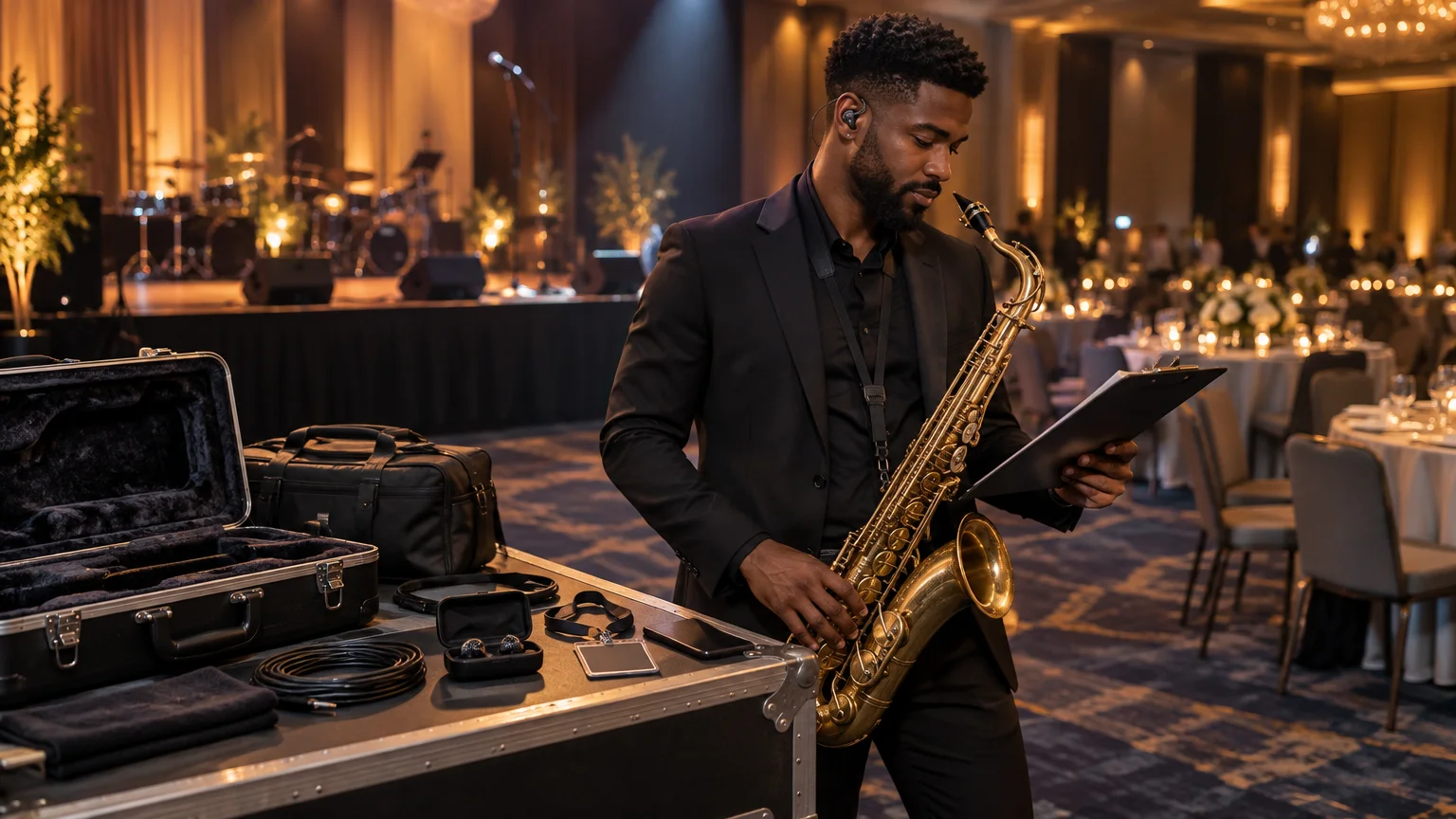
A practical framework for quoting corporate performances based on the complete commitment—not merely the number of minutes spent onstage.

A practical follow-up system for turning inquiries into confirmed gigs, preventing event-day confusion, and building lasting client relationships after the show.
TLDR The saxophone has survived a surprising number of predictions about its death. Electronic instruments were supposed to replace it. Then synthesizers. Then sampling. Then laptops. Yet put a strong saxophone player beside a DJ, R&B singer, reggae band, or hip-hop artist and the instrument immediately makes sense again. The reason is simple. A saxophone … Read more